Beyond Translation: The Case for Content Localization in California’s Digital Services
Translation alone isn’t enough–discover how Compiler bridges the gap between translated and truly usable content with localization that reflects the reality of what people need. By Vyki EnglertHard-coding Google Translate into a government website might satisfy a legal checkbox. In 2026, it shouldn’t satisfy anyone who actually cares whether people can use a service.
California is a multilingual state. More than 200 languages and dialects are spoken here, and roughly 44% of households speak a language other than English at home. In Los Angeles, this reality is even more pronounced. Over half of city residents above age 5 speak a language other than English at home. Yet core civic services, like licensing, benefits, health information, voting tools, are still delivered online via clunky third-party tools, layered over an English-first experience.
On paper, this may look like progress. In practice, it too often means that the hardest part of language access is left out of the picture altogether. The literal and word-by-word translation performed by apps like Google Translate can be technically accurate, while overall meaning is altered or altogether lost. The city of Los Angeles can become, literally, “The Angels.”
These errors may seem small, but when navigating digital interfaces, they can easily route people in the wrong direction, with the wrong documents, and the wrong expectations. They can cause someone to miss a deadline, abandon a form, or get rejected at the end of a submission flow they don’t have time to repeat. This can mean the loss of access to transportation services or food benefits that folks really need. For many of those same people—many of whom have already had too few reasons to trust institutions—a confusing or failed government interaction confirms what they already feared, which is that these systems weren’t really built for them. And that suspicion, once reinforced, is hard to undo.
To prevent these outcomes and ensure equitable access to critical government services across communities, we need more than just content translation. We need content localization, a practical framework for building digital service experiences that are intuitive in languages other than English.
This is work the Compiler team is passionate about, as we have seen firsthand how quickly poor translation services can misguide people and undermine outcomes. We also know that comprehensive content localization across government websites is achievable, but that it is far more straightforward when agencies adopt a baseline set of operating standards.
Here’s our proposal for what those standards could be.
What is content localization?
Content localization is the process of adapting language so it actually works in context, inside a digital product, within UI constraints, using program-specific terminology, matching cultural expectations, and handling local vocabulary and place names correctly. In plain language this means investing time in finding the appropriate word choice or considering app specific context like the size of a button on a webpage.
At Compiler, we focus on localization because we’ve seen that there is a huge gap between “translated text” and an online service that’s actually usable. We know that unless we plan for translation from the beginning, these systems will fail people at critical moments.
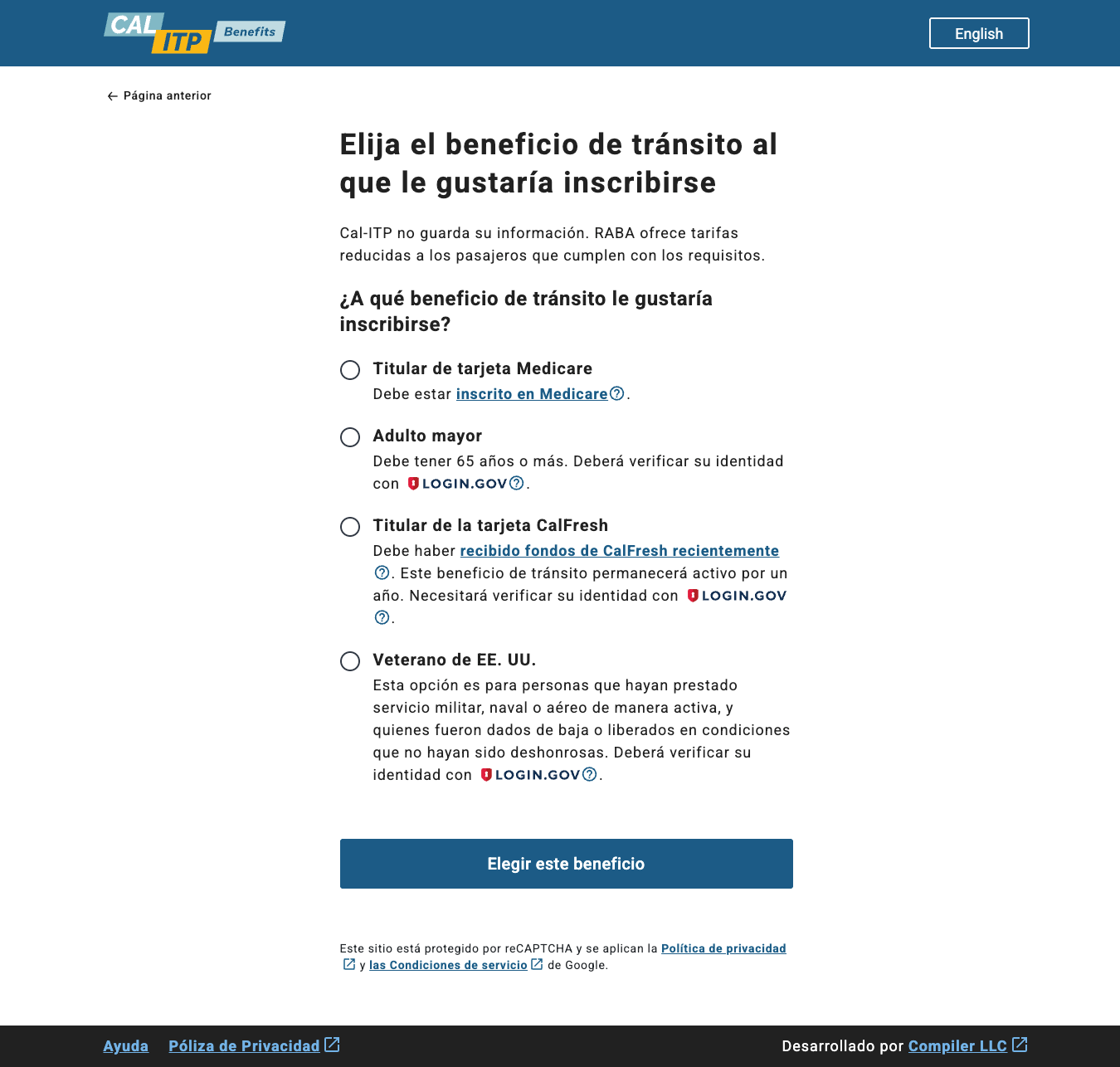
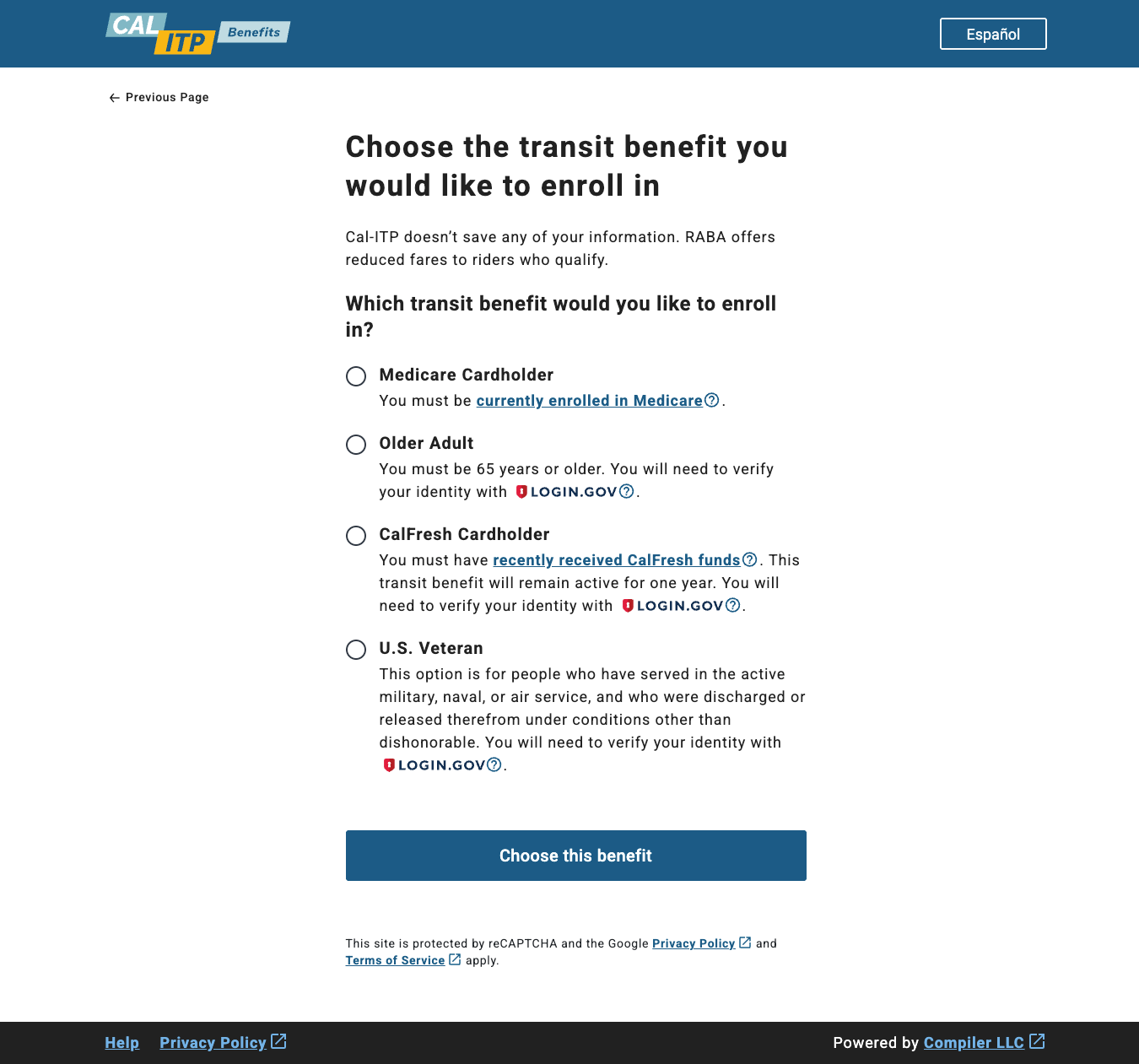
Deciding what languages to translate
Every agency should have a framework for determining which languages it supports. In some cases, that framework is prescribed by law or funding requirements, such as a Language Access Plan (LAP). In others, the agency must establish its own method for making that determination. What matters is not whether every agency uses the same tool, but whether the decision is made through a documented process that uses evidence, assigns responsibility, and is updated on a regular cadence. Some relevant inputs you might consider include service-area demographics, program usage, contact center language requests, website analytics, community-based organization feedback, and observations from frontline staff.
Proposed Operating Standards
Once you’ve determined what languages your team is going to support it’s time to do the work:
-
Establish glossaries + style guides for all languages
If English gets a style guide, covered languages deserve them, too. Include program names, proper nouns, acronyms, tone/formality, and terms that must remain stable across pages and forms. Head Start has a useful example of this, with a Spanish-specific translation style guide and shared terminology resources. -
Make internationalization a baseline requirement
Internationalization, often referred to as i18n for short, is the engineering and design work that makes a website or app adaptable to multiple languages and locales. Procurement for websites and apps should require that products are translation-ready, instead of translated, with externalized strings, translation keys, support for text expansion, and (where relevant) right-to-left layouts. -
Define high priority workflows to receive bilingual QA before release
Not every page carries the same risk. Agencies should designate high-consequence flows, like eligibility, submissions, deadlines, and payments, and hold them to in-language editorial review and functional QA as a release standard. -
Design for trust
When stakes are high, people want to verify. LA County’s Voting Solutions For All People (VSAP) research found that the experience for non-English speaking voters could be substantially enhanced if voters could easily toggle between their preferred language and English, reflecting a real need to confirm meaning and earn trust with non-English speaking users. -
Scope and fund content localization separately (including maintenance)
Content localization and translation work should be budgeted separately, and accounted for as ongoing service work. If it’s treated as an end-stage add-on, anything added later will only be available in English, recreating the initial problem. -
Centralize ownership
We recommend agencies designate a small internal team of experts to be accountable for multi-language support across all programs and functions. This team should advise programs early, own language style guides, coordinate translators, and keep terminology consistent across sites and applications. While we strongly recommend this ownership function be done in-house, we believe it can enable the success of both internal and external translators. Outsourced translations services can be a good fit for agencies that don’t have full time needs or only need periodic help.
If California can set baseline expectations for accessibility, privacy, and security, it can also set new benchmarks for critical language access that reflect the reality of what people need.
The good news is we’re not starting from scratch.
California has already demonstrated that raising the bar for digital services is possible, and that the infrastructure, the will, and the expertise to go further are already here. This is an opportunity to build on our existing progress, and to make language access equal to any other standard we hold our digital services to.
About Compiler
Compiler is a woman-owned software consultancy built by people who use and rely on public systems every day. We partner with government agencies and mission-driven organizations to design, build, and sustain digital services that work better for everyone. Our team combines human-centered design, data expertise, and modern engineering practices to help agencies deliver accessible, maintainable, and equitable digital tools.
If you’d like to learn more about Compiler’s human-centered localization practices or partner with us on a new project, we’d love to talk. Email hello@compiler.la to get started.